


Byzantine Athens
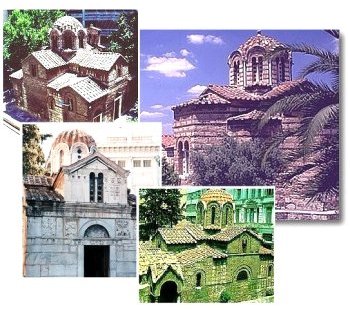
Byzantine Athens (330-1454 A.D.) was very different from the one of the classical, Hellenistic or Roman periods. Having been repeatedly sacked and rampaged and occupied, it became a small village on the borders of the vast Byzantine Empire. The village was typically Medieval with narrow streets following the route of the wider Roman ones, and the architecture of the houses similar to ancient times with the rooms looking out onto a central courtyard without a peristyle.Little remains of the private buildings of this period, especially due to the continual ransacking of the city d uring the following centuries. However the tiny Byzantine churches built between the 10th and the 11th centuries still remain and can be accessed in the ancient quarters.
Byzantine architecture is the link between the Classic and the Medieval, between the East and the West. Thanks to their building skills, Byzantine architects became masters of the domes and vaults of religious architecture, while the painters, often religious men could create breathtaking frescos, completely covering the available surface.
Many of the small Byzantine churches of the times represent sublime evidence of Byzantine ecclesiastical architecture. They are all well kept, rich in decorations and can be found scattered throughout the historical centre. Athens has the highest concentration of Byzantine churches of the whole of Greece, therefore it's a chance not to be missed!!!


